


info@tjprimechem.com+86 22 59891960
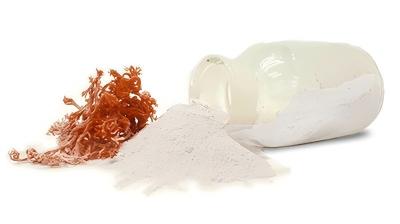
Carrageenan, also known as Irish moss gum or chondrus extract, is a high-molecular-weight hydrophilic polysaccharide extracted from red algae. Its chemical structure is a linear polysaccharide composed of D-galactose and 3,6-anhydro-D-galactose residues.
Food-grade carrageenan appears as a white to light yellowish-brown, shriveled, slightly lustrous, translucent sheet or powder. It is odorless or has a slight odor, tasteless, and has a sticky and smooth texture. It swells in cold water and dissolves in hot water above 60°C to form a viscous, transparent or slightly milky, free-flowing solution. However, it is insoluble in organic solvents. At or below its isoelectric point, it is readily miscible with alcohols, glycerin, and propylene glycol, but incompatible with detergents, low-molecular-weight amines, and proteins.
Based on its properties, carrageenan is commonly used in the food industry as a thickener, gelling agent, suspending agent, emulsifier, and stabilizer. The production and application of carrageenan are closely related to its rheological properties. Therefore, accurately understanding the rheological behavior of carrageenan and its variations under different conditions is of great significance for production.
Name: Anna, Oksana
Mobile:+86 13003135108
Tel:+86 22 59891960
Whatsapp:+8613003135108
Email:info@tjprimechem.com
Add:No.1570 Hechang Road, District Binhai, Tianjin, 300480, China